Walk 14: The County of Flanders and the Duchy of Brabant

Bruges:
At the time the County of Flanders and the Duchy of Brabant included a number of cities very much related to Thomas More and his circle such as Bruges, in Flanders, and Antwerp, Mechlin, and Leuven, in Brabant. The County of Flanders became part of the Duchy of Brabant in 1369, and both were incorporated into the Duchy of Burgundy in 1430, which in 1477 became part of the House of Habsburg.
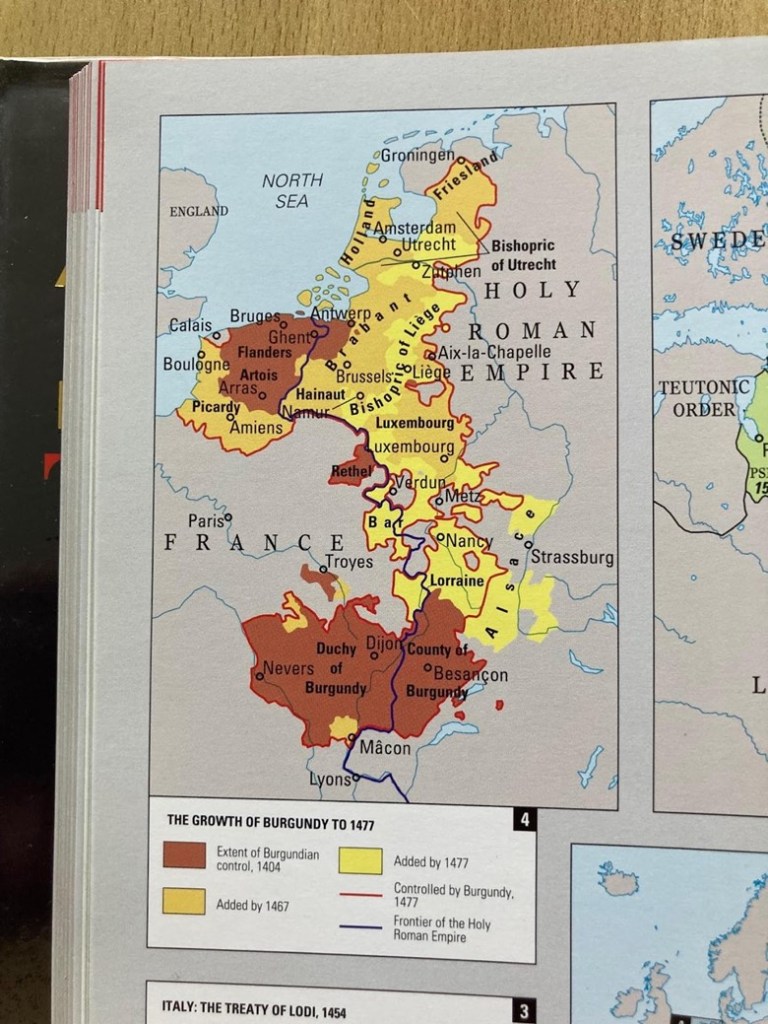
Figure 1: Map taken from The Times, Atlas of European History, published in 1994
Prince Charles of Castille, born in Ghent in 1500, as head of the House of Habsburg, was Duke of Burgundy from 1506. He was later to become King of Spain (1516-1556) and Holy Roman Emperor (1519-1556).
The first paragraph of More’s Utopia starts:
The most invincible King of England, Henry, the eighth of that name, a prince adorned with the royal accomplishment beyond any other, had recently some differences of no slight import with Charles, the most serene Prince of Castille, and sent me into Flanders as his spokesman to discuss and settle them.1
The second paragraph reads:
Those appointed by the prince to deal with us, all excellent men, met us in Bruges by pre-arrangement. Their head man and leader was the Mayor of Bruges, a most distinguished person. But their main speaker and guiding spirit was Georges de Themsecke, the Provost of Cassel, also very learned in the law, and most skilful in diplomatic affairs through his ability and long practice. After we had met several times, certain points remained on which we could not come to agreement; so, they adjourned the meeting and went to Brussels for some days to learn their prince’s pleasure.
And it continues:
Meanwhile, since my business required it, I went to Antwerp.
This is the first reference to Bruges and Antwerp in the life of More. In Antwerp he met Peter Giles, as we will consider later on.
The second time More appears in Bruges, he was sent there on a diplomatic mission to negotiate with the German Hanse in 1520. He stayed in Bruges from 19 July to 12 August 1520, and during that time Erasmus introduced him to Frans van Cranevelt. “More and Cranevelt became close friends at once”.2
Frans van Cranevelt (1485-1564) was born in Nijmegen near the border with Germany. In 1501 he moved to the University of Leuven and 1510 he took his Doctor juris utrisque there and continued in that city until he moved to Bruges in 1515 until 1522, where he was made a member of the Burgundian Great Council in Mechlin. Cranevelt belonged to the group of highly educated lawyer-humanists like More, Vives, Budé, and Amerbach.
It was therefore in that period of July and August 1520 when More and Cranevelt became friends, and afterwards they corresponded. There are seven extant letters from More to Cranevelt. Five of them were written in London (including Greenwich and Westminster). These are dated December 1520, March 1521, April, 1521, March 1522, and November 1528.3
There is also an extant letter from More to Cranevelt from Bruges, October 1521, when More was again in that city as a member of a delegation to renew negotiations with the German Hanse. During that period More wrote also three extant letters to Wolsey.
And lastly, there is an extant letter from More to Cranevelt written “At my little country house near London, the 12th day of November”. Herbrüggen suggest that it should be assumed that the year was 1521, and that the “little country house near London” was More’s house in Chelsea. This would correct the dating of More’s move to Chelsea from 1524 (On 1 October 1524, Margaret Roper translated Erasmus’s Precatio Dominica at Chelsea), to 1521 (Margaret’s marriage-licence of 2 July 1521 is entered as belonging to the parish of St Stephen’s Walbrook); and it is corroborated by Harpsfield’s account of More’s illness in 1521.4
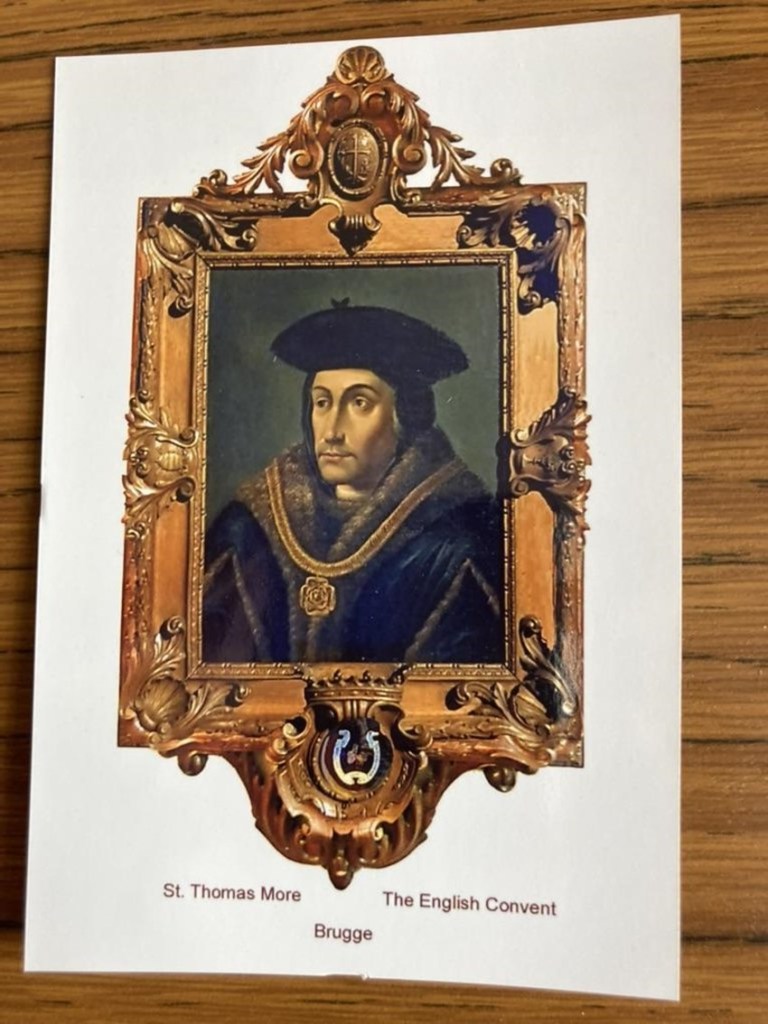
Figure 2: Relic of St Thomas More kept in the English Convent, Bruges
Antwerp
As he writes, while Prince Charles’s delegation went to Brussels for consultation, Thomas More travel to Antwerp, where he met Peter Giles, and one day, after having heard Mass at the church of St Mary, the most beautiful and most popular church in Antwerp, Peter introduced him to Raphael Hythloday.
The event is recorded on a plaque outside the now Cathedral of Our Lady.

Figure 3: Plaque on the ground in front of the Cathedral of Our Lady

Figure 4: The text, quite illegible, is in various languages: Japanese in the first line, English in the second, …
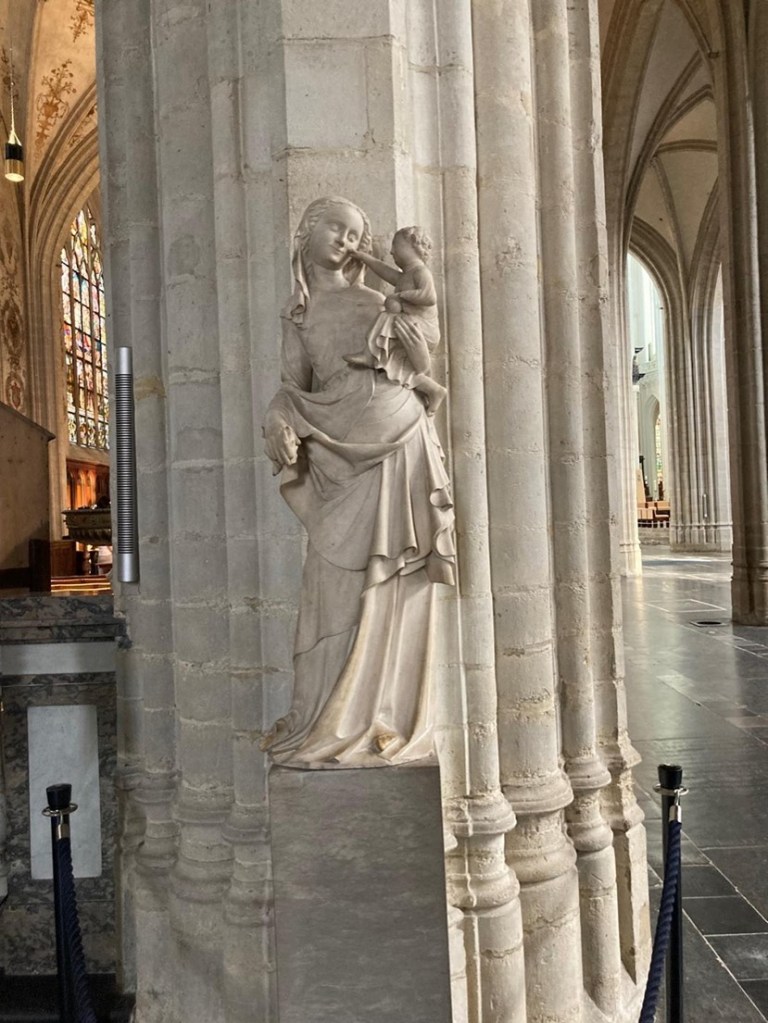
Figure 5: This statue of Our Lady and the Child near the west entrance of the cathedral is dated circa 1351 but it was donated to the cathedral only recently. The statue is typical of Maasland, the region of the river Maas. It is likely that there was a similar statue inside the church when Thomas More it in 1515. The original statue would have been lost when most of the images were destroyed on 20 August 1560 by the iconoclasts.

Figure 6: General view of the cathedral, August 2023

Figure 7: The model of the cathedral as it was from 1492 to 1521, shows that, apart from the clock tower, the cathedral visited by Thomas More was not much different from the present one. Model kept inside the cathedral in 2023.
Peter Giles was a town clerk of Antwerp. Another person in this city related to More was Quentin Metsys, who painted the diptych of Erasmus and Peter Giles which they sent to Thomas More, cf. Thomas More’s Vocation, pp. 56-58.
Leuven
The University of Leuven was founded in 1425. Erasmus moved to Leuven in 1502. There he met Peter Giles, who studied law at the university.
The public orator at the University commissioned Erasmus to compose a Latin oration for Philip, the Duke of Brabant, resulting in the Panegyricus that Erasmus eventually delivered on January 6, 1504 in presence of the Estates of Brabant. These Estates assembled deputies of the Clergy, Nobility and four ‘Capitals’ of Brabant: Brussels, Louvain, Antwerp and ‘s-Hertogenbosch; they arranged this ceremony to celebrate the return of Philip to Brussels after a long stay in Spain, home country to his wife Joanna of Castile. At the death of Philip, his 15-year-old son, Prince Charles (future king of Spain and Holy Roman Emperor) became Duke of Brabant. Erasmus dedicated to him the Institutio Principis Christiani, published in May 1516.
For the relevance of the encounter of Erasmus with Giles, and of the Institutio Principis Christiani, see Maarten M. K. Vermeir, “Brabantia: decoding the main characters of Utopia”, Moreana, nos. 187-188, pp. 151-181.
As has been mentioned, Frans van Cranevelt studied also at Leuven University, as well as another friend of Thomas More, Juan Luis Vives.
The first edition of Utopia was published in Leuven in 1516.
After More’s execution some of his circle exiled to Leuven, and it was in Leuven where his works in Latin and in English were published.
Mechelen
In Mechelen Thomas More enjoyed the hospitality of Jerôme de Busleyden. The city is
also related to the circle of Thomas More. Cranevelt moved there in 1522, and Margaret Clement died there in July 1570.
- This took place in 1515. By then, Charles, born in 1500, was Duke of Burgundy since 1506. He was Prince of Castille, because he was the son of Joanna Queen of Castille, until the death of Ferdinand, king of Aragon and Castille, in 1516; then Charles became king of Spain. ↩︎
- Hubertus Schulte Herbrüggen, More to Cranevelt, New Baudouin Letters, Supplementa Humanistica Lovaniensia, XI, Leuven University Press, 1997, p. 36. Most of the references to Cranevelt in this website entry come from this publication by Herbrüggen. ↩︎
- For the friendship between More and Cranevelt see the various entries in Thomas More’s Vocation. ↩︎
- Herbrüggen, p. 154. ↩︎
 Thomas More Research